
Weeknote: microsites vs subsites, complaints and a pastéis de nata addiction
After a few weeks off, enjoying the football (apart from the other night) and spending a week in Portugal drinking plenty of rosé and eating way too many pastéis de nata, I’m back at my desk and getting my teeth into some exciting work.
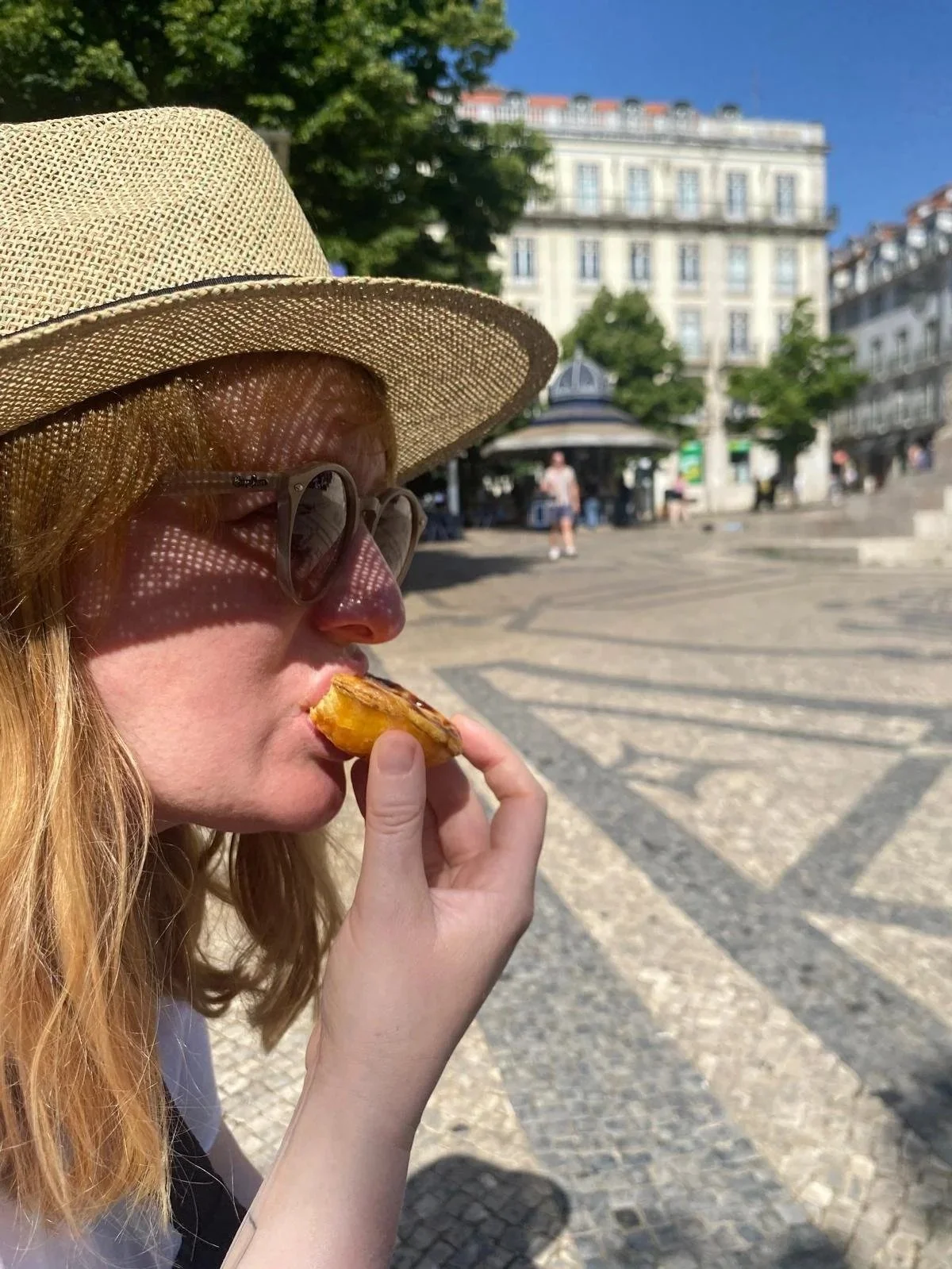
Eating my third pastéis de nata in a row from Manteigaria in Porto.
LocalGov Drupal Community Meetup: Microsite and subsite panel discussion
This week I took part in a panel discussion with Ella Stimson from Essex County Council and Paul Barnett from Haringey Council for a LocalGov Drupal Community Meetup.
We talked about how we define subsites and microsites, when we would use each one, the governance needed around them, the challenges we face, and the features we would like to see.
Examples of subsites and microsite
My current working definitions are:
Subsite: a content type within the corporate website for a council-run service that needs more engaging or audience-specific design while remaining closely connected to a council
Microsite: an independent website with its own domain, often created for a partnership, campaign or initiative that is not entirely led by one council
We each shared examples of subsites and microsites we had created. This was particularly interesting because it showed how blurred the distinction between the two can be.
Subsites:
Whitesand project – Dumfries and Galloway Council
Hello Essex – Essex County Council
Family Hub – Haringey Council
Microsites:
DGVOST – Dumfries and Galloway Council
Love Essex – Essex County Council
Haringey Feast – Haringey Council
Governance around microsites
The stories about microsites often followed a similar pattern.
A project begins with plenty of energy, a clear owner and a budget. The site is designed, built and launched. The difficulty comes afterwards.
Responsibility might be handed to a service team or an individual communications officer who does not have the support of a wider content team, an established publishing process or a long-term maintenance plan.
That creates several risks:
content becomes outdated
accessibility issues go unnoticed
ownership becomes unclear
the site is eventually left unattended
This feels very different from how we manage a corporate website.
A council’s main website will usually have an established publishing workflow, a team responsible for standards, a process for requesting new content, and conversations about user needs before anything is created.
Microsites do not always receive the same level of scrutiny, despite requiring just as much ongoing care.
The important question is therefore not only whether something should be a microsite or a subsite. We also need to ask whether there is a sustainable structure around it:
Who owns it?
Who reviews it?
Who is responsible for accessibility?
What happens when the original project ends?
What happens when the people involved move on?
A website should not be treated as a one-off product that is finished at launch. Governance, ownership and maintenance need to be considered from the beginning.
I have already started defining more clearly what we mean by microsites and subsites, and developed a microsite policy for Cumberland Council setting out when a separate site is appropriate and what needs to be in place before one is created. It was encouraging to hear that others are now using the policy to support their own work.
Working on a new complaints process
I have also been involved in the kickoff for a new complaints form and case-management app at a council.
The initial focus is on making it easier for caseworkers to receive, triage and manage complaints. The next stage will be to look more closely at the content and the front-end user journey.
The annual complaints report suggests that many people contact the council about delays, outstanding service requests or problems that could potentially be resolved through an existing service route.
Someone reporting a missed bin, for example, may not need to enter a formal complaints process at all.
This gives us an opportunity to do more than recreate the current process in a new system. We can make the journey more intuitive, identify what the user is trying to achieve and direct them to the right service before they complete a complaint form.
The challenge will be to do that without creating barriers for people who have already tried the normal service route, or who have a legitimate complaint about conduct or how their case has been handled.
Looking ahead to next week
I have recently started a training course called the Speaking Gym. It is a programme for people who sometimes feel nervous in meetings. It gives us techniques to help ground ourselves, as well as opportunities to practise speaking in a small group.
My confidence in meetings can fluctuate. Sometimes I am comfortable giving an update, introducing myself or running a workshop. At other times, my heart races and I think I’m going to forget everything.
I am interested to see whether practising these situations more regularly will help them feel more familiar and manageable.
I am also about to start migrating content from the LocalGov Drupal documentation site for content designers, editors and managers to the new microsite we began working on at LocalGov Drupal Camp last month.
We have our first group meeting next week. The plan is to migrate the content as it is for now, then improve and develop it once the migration is complete. After that, we hope to open up contributions to the wider community.
A lovely moment in Margate
I wanted to share a lovely moment from a recent visit to one of my favourite coffee shops in Margate.
I often go there for a flat white with my dog after a walk on the beach. A woman came over to me and said:
“I’ve drawn you and your dog in here before.”
She showed me the picture and said she had wanted to capture the connection between us because she could see the love there.
It made me think about how the small, ordinary moments we share with those we love can stay with other people too. Someone noticed that moment and wanted to turn it into art. I thought that was a beautiful thing.
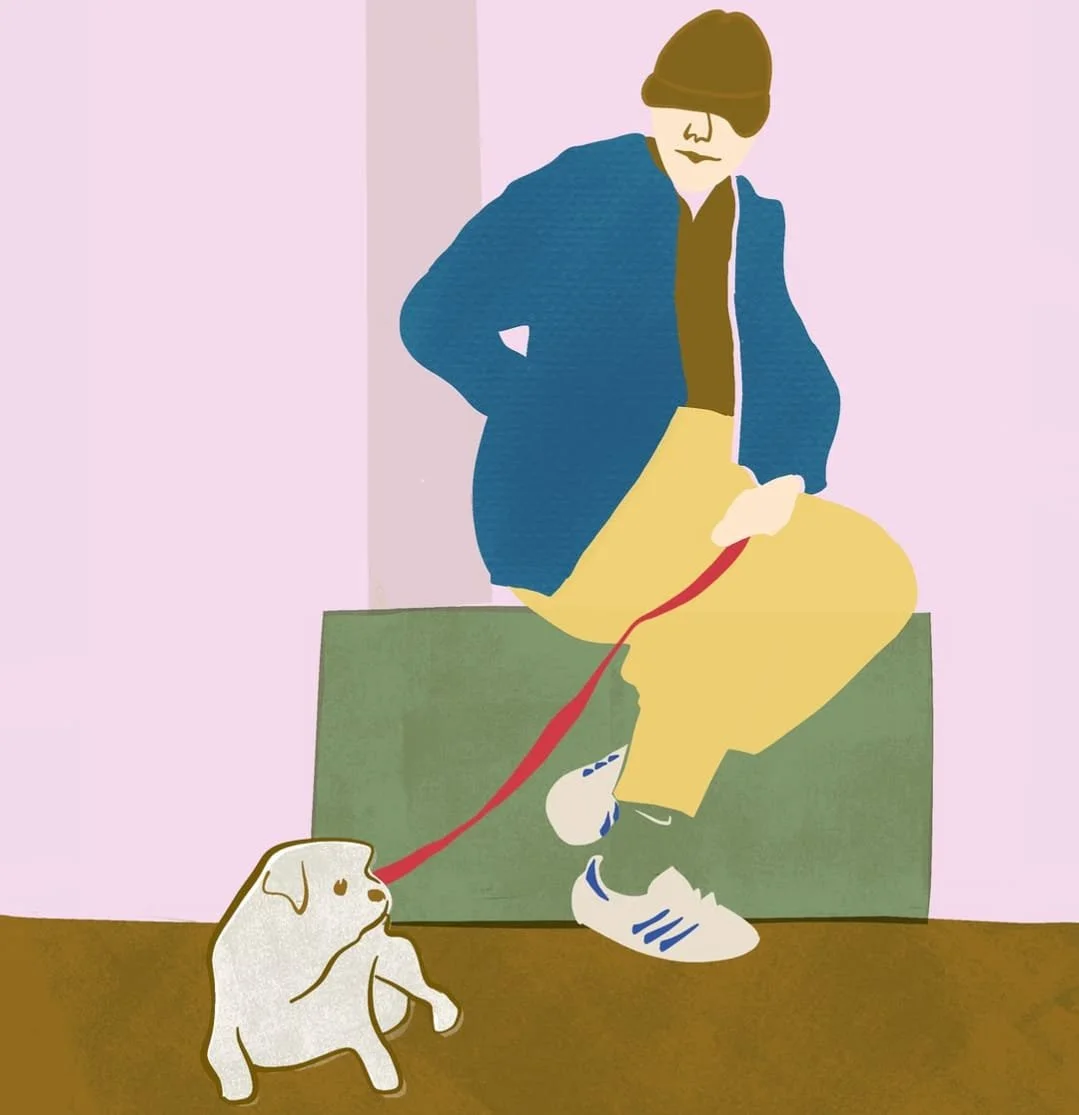
Capturing a moment between me and Pat from @margateeditions.
