
LocalGov Drupal Camp 2026: community, contribution and content
A few weeks ago I went to LocalGov Drupal Camp in Sheffield. I came away from it inspired, grateful and exhausted (in a good way).
Running a content clinic
Ben (from the Digital Word) and I spent the first day running a content clinic.
We created a space for informal conversations. Our setup was fairly simple:
a couple of chairs
some prompt cards
a rainbow garland (because we are fabulous)
a few snacks (you've got to have some incentive to lure people in)
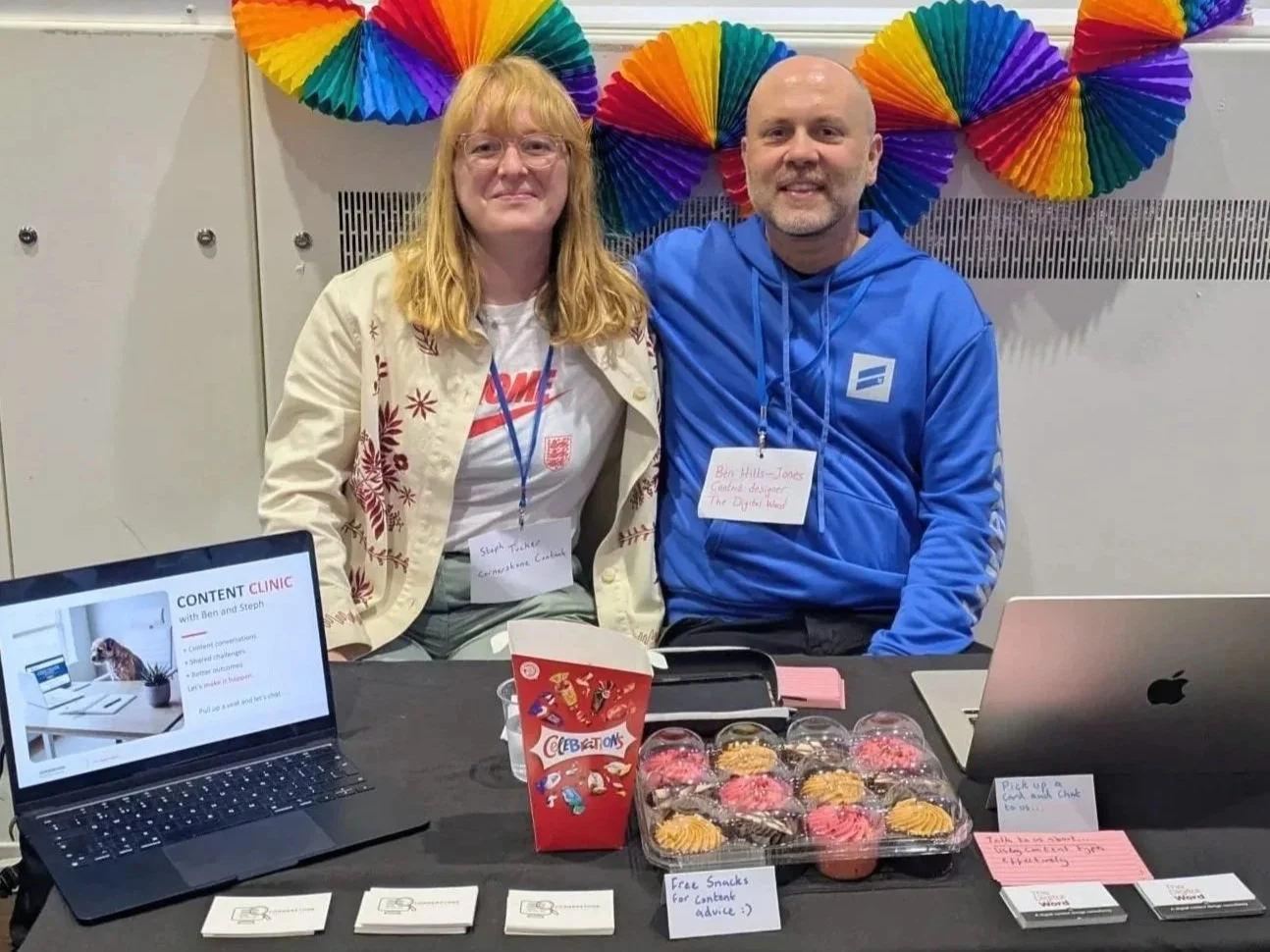
The Content Clinic in all its glory. No expense spared.
People stopped by throughout the day to talk about content challenges, Drupal, governance, content types, migrations and all the messy real-world problems that don't always fit neatly into a conference session.
One conversation was with someone completely new to Drupal who wanted to understand how content could be managed effectively. We talked about service ownership using the service contact feature, workflows and content filtering to make it easier to understand who is responsible for content and where attention is needed.
Another discussion focused on microsites, content modelling and what we'd like to see from LocalGov Drupal in the future.
One recurring theme was bringing more insight directly into the backend of the CMS. Imagine opening a page in Drupal and immediately seeing analytics, search data or user behaviour information alongside the content itself. It feels like something that's entirely possible and would help content teams make better decisions.
A new annotation feature in Drupal
We also spoke to NikLP, who showed us an exciting new annotation feature he's developed for Drupal.
I've been banging on for years about how guidance is most useful when it's available where people are actually doing the work, rather than tucked away in a separate document.
This feature lets editors see contextual guidance directly within the Drupal interface, making it much easier to support good content without forcing people to leave the page they're editing.
You can find out more about the annotation feature from Nik’s LinkedIn post.
A reminder that content quality still matters
I also attended a session on governing AI search.
While some of the technical detail was beyond me, the message I took away was surprisingly reassuring: the foundation of effective AI-powered search isn't sophisticated technology. It's good content.
Content quality, ownership, governance and review processes are the foundation of what makes search work well. In other words, all the things content people spend their time worrying about still matter.
One example showed how slight differences in wording could dramatically affect the information returned by AI-powered search.
It was a useful reminder that if organisations want better outcomes from search and AI, they need clear, accurate and well-maintained content first.
Contribution day
The second day was contribution day, which was completely new to me.
People from different councils, agencies and disciplines came together to work on things that would benefit the LocalGov Drupal community.
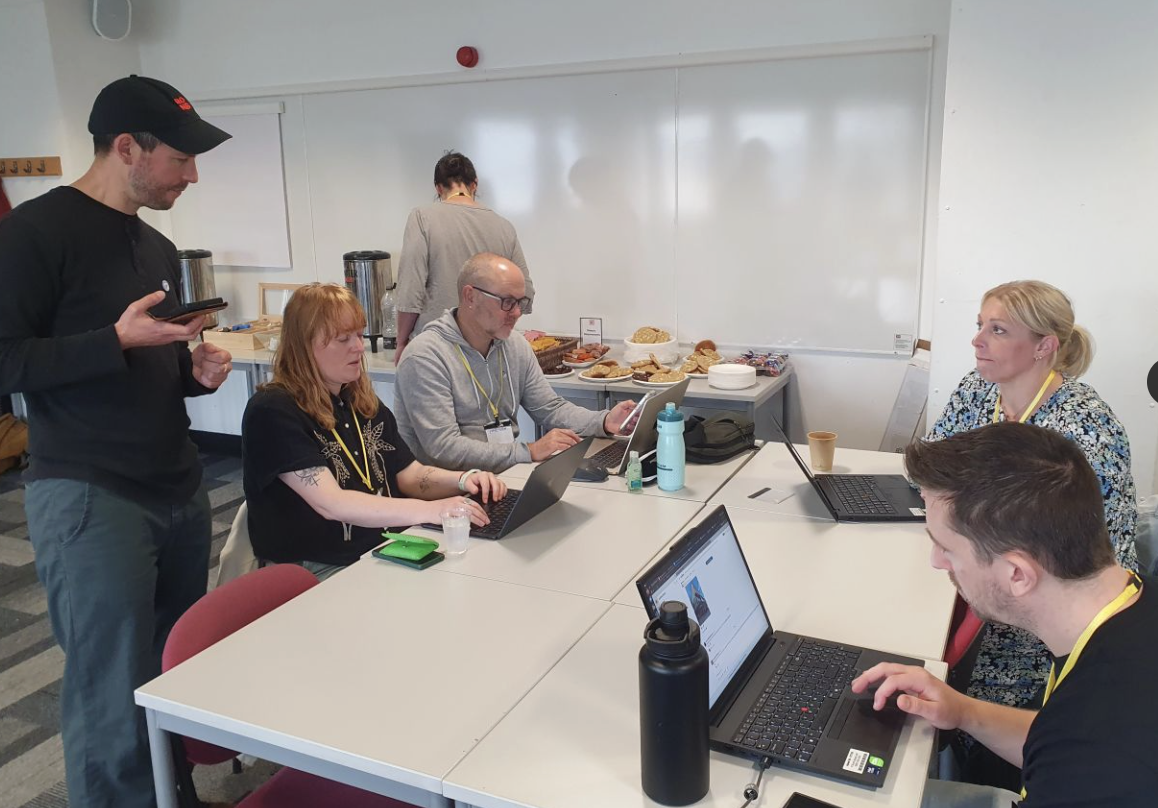
LGD contribution day in full swing.
I spent the day helping shape the future of the LocalGov Drupal documentation as part of its move from the current documentation site to a Drupal microsite.
Rather than simply moving content across, we saw it as an opportunity to rethink how guidance is organised and used. I have been talking for a while about the value of creating a shared LocalGov design system that brings together guidance, patterns and best practice in a way that councils can contribute to and benefit from collectively.
Armed with post-it notes and a lot of discussion, we worked through a large card-sorting exercise to explore how the documentation could be structured.
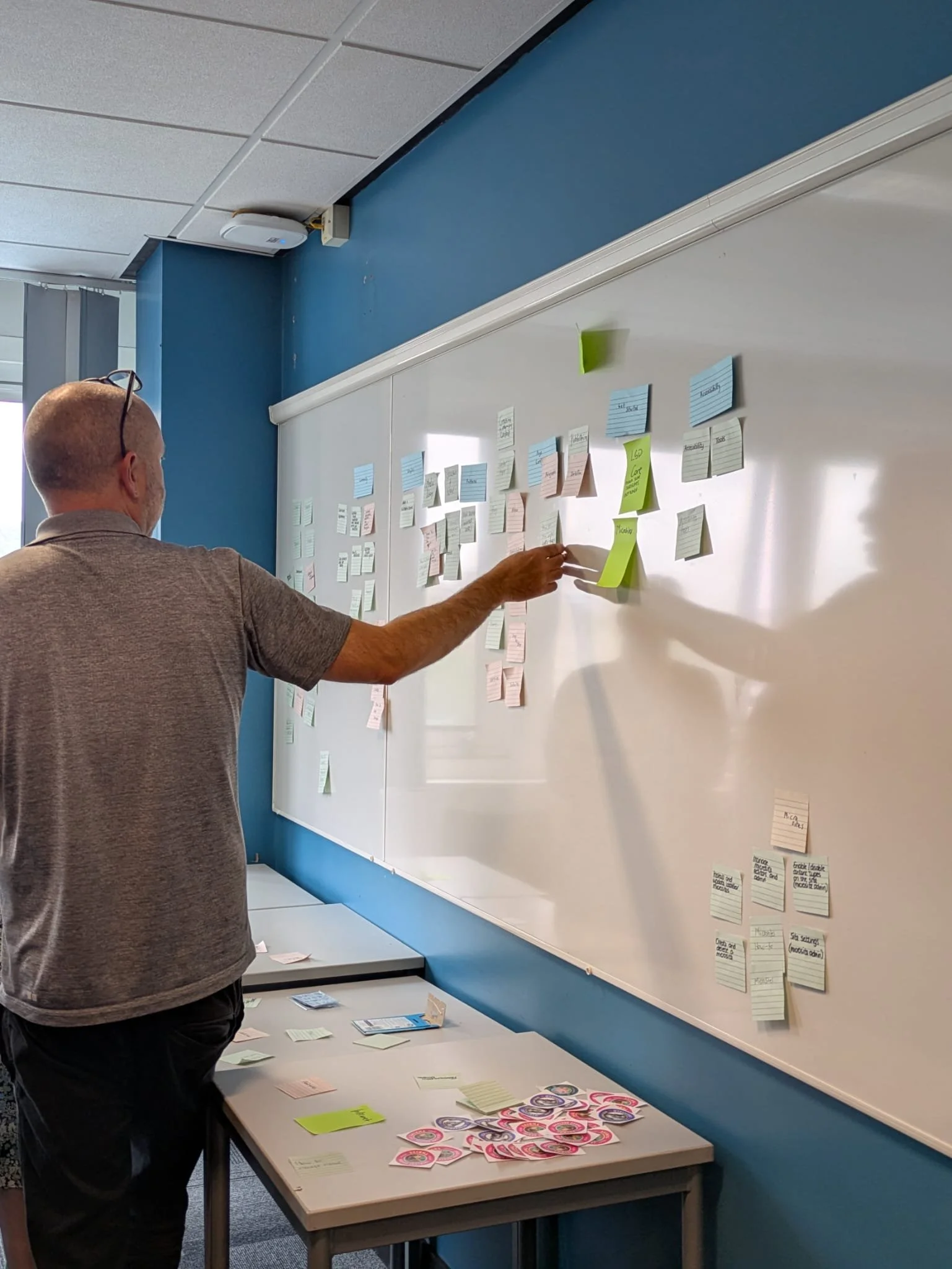
We mapped out a new structure for the documentation using post-its.
The most valuable part wasn't the outcome. It was hearing different perspectives from people across the community and understanding what they need from guidance and documentation.
We left with the beginnings of a working group and a shared commitment to keep moving the work forward.
Watch this space!
Why community matters
Looking back, what I'll remember most is the feeling of being part of something.
It's easy to spend most of your time focused on projects, deadlines and the day-to-day realities of the job. Events like this remind me that there's a wider community of people facing similar challenges, sharing ideas and trying to improve local government digital services together.
I also came away feeling proud that I pushed myself outside my comfort zone.
More than anything, I left feeling genuinely enthusiastic about the work we do. Not just because of the technology or the products, but because of the people behind them.
It's not often you get to spend two days surrounded by people who care deeply about making local government services better.
I'm already looking forward to the next one.
